
You know that sinking feeling. You’ve saved up for months, booked the flights, and finally landed in what every influencer promised was a “hidden gem” in Europe. But instead of cobblestone solitude, you’re shuffling shoulder-to-shoulder with a thousand other tourists holding selfie sticks. You’re paying €9 for a lukewarm beer. The “local” restaurant has a menu in five languages and a QR code for a waiting list.
I’ve been there. Twice. And I swore I’d never fall for the hype again.
Here’s the truth: Europe in 2025 is going to be more crowded than ever. Major hubs like Barcelona, Venice, and Amsterdam are actively implementing tourist taxes and crowd-control measures. But there’s a workaround — a handful of cities that are genuinely cheaper, significantly less crowded, and way more interesting than the algorithm wants you to know.
Let’s skip the obvious picks. Here are 10 underrated European cities that deserve your 2025 vacation budget.

The City That Feels Like Prague in 2005
Plovdiv, Bulgaria
Most people fly right over Bulgaria on their way to Greece or Turkey. Big mistake. Plovdiv is Europe’s oldest continuously inhabited city — we’re talking 6,000 years of history — and it costs a fraction of what you’d pay in Western Europe.
I spent three days here last spring and spent less on accommodation than I do on a single weekend in my own city. A nice private room in the Kapana creative district runs about €25-35 a night. A sit-down dinner with wine? €12, max.
What most people miss: The Roman amphitheater isn’t just a photo op — they still hold concerts there. And the collaborative street art scene in Kapana is genuinely world-class, not some tourist-trap mural painted last week.
Plovdiv is also incredibly walkable. You can see the main sites in two days, but you’ll want to stay longer just to sit at a café and watch the city breathe. It’s relaxed, it’s real, and it’s cheap.
The Coastal Town That Barcelona Wishes It Still Was
Gdansk, Poland
Let’s be honest — Barcelona is a mess right now. Overcrowded, overpriced, and locals are understandably fed up. But Gdansk? Gdansk has the Baltic Sea, a stunning old town, and beer for €2.50.
The Long Market here is one of the most beautiful squares in Europe, and it’s not packed shoulder-to-shoulder in July. You can actually walk down the street without dodging a segway tour.
I’ve found that travelers overlook Poland’s coast because they’re fixated on Krakow or Warsaw. But Gdansk offers a completely different vibe: maritime history, amber shopping (it’s the amber capital of the world), and access to the Slowinski Sand Dunes — a surreal desert-like landscape right on the Baltic.
Pro tip: Visit in late May or early September. The weather is perfect, prices drop, and you’ll have entire sections of the beach to yourself.

The Secret Capital of Cool You’ve Never Heard Of
Ljubljana, Slovenia
I know, I know — everyone is shouting about Slovenia lately. But hear me out. Ljubljana is still massively underrated compared to its neighbor Croatia. While Dubrovnik has become a Game of Thrones theme park with cruise ship crowds, Ljubljana remains a calm, green, bike-friendly capital where the riverbanks are filled with locals, not tourists.
The city center is car-free. The castle is a short funicular ride up, and the view is free. A meal at a central restaurant costs around €10-15, and the local wine is excellent and cheap.
What most people miss: Ljubljana is a gateway to three countries. You can take a day trip to Lake Bled (yes, it’s crowded, but it’s worth it), or cross into Croatia or Italy in under an hour. The city itself is small enough to explore in a weekend, but you’ll want a base here for a week.
The Portuguese City That’s Better Than Lisbon (And Half the Price)
Porto, Portugal
I’m bracing for pushback on this one. But I stand by it. Porto is better than Lisbon for budget-conscious travelers in 2025. Lisbon’s popularity has exploded — rents are up, crowds are thick, and the charm is starting to feel manufactured.
Porto, on the other hand, still feels like a real city. The Douro River valley is stunning. The port wine cellars are affordable and welcoming. And the food? Francesinha (a ridiculous meat-and-cheese sandwich) is the best hangover cure ever invented.
Accommodation is 30-40% cheaper than Lisbon. You can get a riverside room for €60-80 a night. And the metro system is simple and cheap.
What most people miss: The Livraria Lello bookstore is famous (and crowded), but skip the paid entry and instead explore the smaller independent bookshops in the Cedofeita district. Also, take the train to the Douro Valley for a day — it’s one of the most beautiful train rides in Europe, and wine tastings are €5.
The City That Doesn’t Want You to Find It
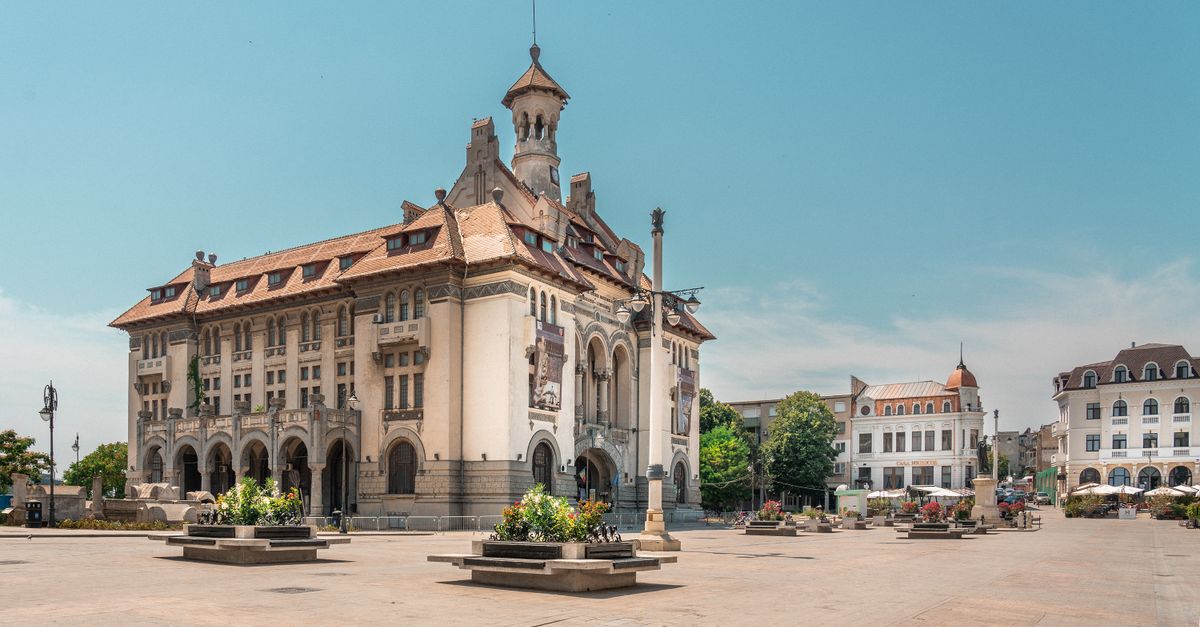
Timisoara, Romania
Timisoara is the city that keeps getting overlooked. It was the European Capital of Culture in 2023, but somehow it’s still flying under the radar. That’s about to change.
This is a city of squares — three main squares, each with a different personality. The architecture is a mix of Baroque, Art Nouveau, and Communist-era blocks. It’s gritty, beautiful, and completely authentic.
A meal with drinks: €8-10. A tram ride: €0.50. A nice hotel room: €40-50.
What most people miss: Timisoara is the birthplace of the 1989 Romanian Revolution. There’s a museum and memorial that are sobering and essential. Also, the city has a thriving craft beer scene — try Bere Timisoreana, the local brew, at a pub called Bereta.
The Underrated Northern Escape
Tartu, Estonia
Everyone goes to Tallinn. And Tallinn is great — the old town is a fairy tale. But it’s also become a cruise ship destination, and prices have climbed.
Tartu is Estonia’s second city, a university town with a young, intellectual vibe and a fraction of the tourists. The city center is pedestrian-friendly, and the Supilinn neighborhood (Soup Town) is a collection of colorful wooden houses that feel like a time capsule.
A room in a guesthouse: €30-50. A student pub meal: €6-8.
What most people miss: Tartu is the cultural and intellectual heart of Estonia. The University of Tartu is one of the oldest in Northern Europe, and the city has a quirky, creative energy. Also, the AHHAA Science Centre is genuinely fun for adults — interactive and not just for kids.
The Italian City Everyone Forgets
Bologna, Italy
I love Bologna. I love it so much I’m almost reluctant to recommend it because I don’t want it to change. But here’s the thing: Bologna is already changing, and it’s still affordable compared to Rome, Florence, or Venice.
The food is the best in Italy. Period. This is the home of tortellini, mortadella, and ragù (the real Bolognese). You can eat like a king for €15.
The city is walkable, the porticoes are a UNESCO World Heritage site, and the Two Towers offer a killer view for a few euros.
What most people miss: Bologna is a train hub. You can day-trip to Florence (35 minutes), Verona, or even Venice. But the city itself is worth a long weekend.
The Spanish City That’s Not Madrid or Barcelona
Valencia, Spain
I know Valencia is getting more attention lately, but it’s still significantly cheaper and less crowded than its bigger siblings. The City of Arts and Sciences is stunning, the old town is charming, and the paella was invented here.
A meal in the central market: €8-12. A beach day: free. A nice hotel: €60-80.
What most people miss: The Turia Park is a 9-kilometer-long green space built in a dry riverbed. You can bike, walk, or just sit. Also, the Mercado de Colon is a gorgeous Art Nouveau building with great food stalls.
The German City That’s Not Berlin
Leipzig, Germany
Leipzig is Berlin’s cooler, cheaper cousin. It has a thriving arts scene, great nightlife, and a fraction of the tourists. The city is full of young creatives, and you can feel it.
Accommodation: €40-60 a night. A beer at a bar: €3-4.
What most people miss: The Leipzig Bach Museum is excellent, and the Auerbachs Keller restaurant is where Goethe wrote part of Faust. Also, the city has an underground art scene that rivals Berlin’s.
The Balkan Surprise
Novi Sad, Serbia
Novi Sad is the exit festival city, but even when the festival isn’t on, it’s a gem. The Petrovaradin Fortress overlooks the Danube, and the old town is full of cafés and bars.
A meal: €6-8. A beer: €1.50. A room: €25-40.
What most people miss: The Fruska Gora National Park is a short bus ride away and has hiking trails, monasteries, and vineyards. Also, the city is incredibly safe and welcoming.
The Bottom Line
Here’s what I’ve learned after years of chasing cheap flights and empty streets: The best European cities aren’t the ones on every list. They’re the ones you find when you stop looking for the popular destinations and start trusting the places that don’t try to sell themselves.
Plovdiv, Gdansk, Ljubljana, Porto, Timisoara, Tartu, Bologna, Valencia, Leipzig, Novi Sad. These cities are waiting for you in 2025. They’re cheaper. They’re less crowded. They’re more real.
So skip the queue in Barcelona. Leave Venice to the cruise ships. Go somewhere that still has secrets. Your wallet — and your sanity — will thank you.