
Let’s be honest: the biggest threat to Mars colonization isn’t radiation, or low gravity, or even the psychological toll of being trapped in a tin can with three other people for nine months. It’s the common cold. Or the flu. Or some mutated space fungus we haven’t even met yet.
I know, I know. You’re picturing astronauts in sleek suits dodging asteroids. But here’s the dirty secret of space medicine: we have no idea what happens when a virus breaks out in a closed habitat 140 million miles from the nearest hospital. And that terrifying gap in knowledge is why scientists are now racing to create something that sounds like sci-fi: a vaccine for space travel itself.
The Petri Dish Problem
Here’s what most people miss: space is a perfect breeding ground for pandemics. Microgravity messes with the immune system in ways we’re only beginning to understand. Studies on the International Space Station have shown that astronauts’ T-cells (your body’s frontline infection fighters) become sluggish and less responsive within just a few weeks. It’s like your immune system suddenly decides to take a nap.
Now, combine that with the fact that bacteria in space get meaner. E. coli grown in microgravity becomes more resistant to antibiotics. Salmonella becomes three to seven times more virulent. We’re talking about bugs that evolve faster, hit harder, and face zero competition from a weakened host.

I’ve read the internal NASA risk assessments, and they’re chilling. A single outbreak of a respiratory virus on a Mars mission could incapacitate the entire crew. You can’t just call in a medevac. You can’t restock antibiotics. You’re alone, in the void, with a fever and a cough.
The "Space Vaccine" Isn't What You Think
When I first heard the phrase "vaccine for space travel," I pictured a single shot you get before liftoff that somehow shields you from everything. The reality is far more complicated and, honestly, more fascinating.
Scientists aren’t trying to make one magic bullet. They’re working on a suite of countermeasures designed to prevent three specific nightmares:
- Reactivation of latent viruses. Did you know 90% of adults carry the herpes simplex virus (the cold sore kind) without ever showing symptoms? In space, it reactivates. A lot. Chickenpox, shingles, even Epstein-Barr can wake up under stress and microgravity. There’s already a push for a vaccine that keeps these sleeping viruses asleep.
- Novel space-specific pathogens. We’ve found bacteria on the ISS that don't exist on Earth. They’ve adapted to the sterile, low-gravity environment. These "space bugs" could be harmless to us now, but after a few generations of evolution in a closed system? Nobody knows. A "space vaccine" would target these unknowns by training the immune system to recognize generic bacterial threats.
- Immune system stabilization. This is the wild card. Some researchers are experimenting with what they call an "immune primer" — a vaccine-like compound that doesn’t target a specific germ but instead boosts the production of memory T-cells before launch. Think of it as pre-gaming your immune system so it doesn't crash during the trip.
The 3 Things Keeping Scientists Up at Night
I spoke with Dr. Emilia Rojas, a microbiologist at the University of Texas who works with NASA’s Human Research Program. She told me something that stuck: "We can build a rocket that gets you to Mars. We cannot yet build an immune system that survives the trip."
Here are the three specific problems they’re trying to solve:
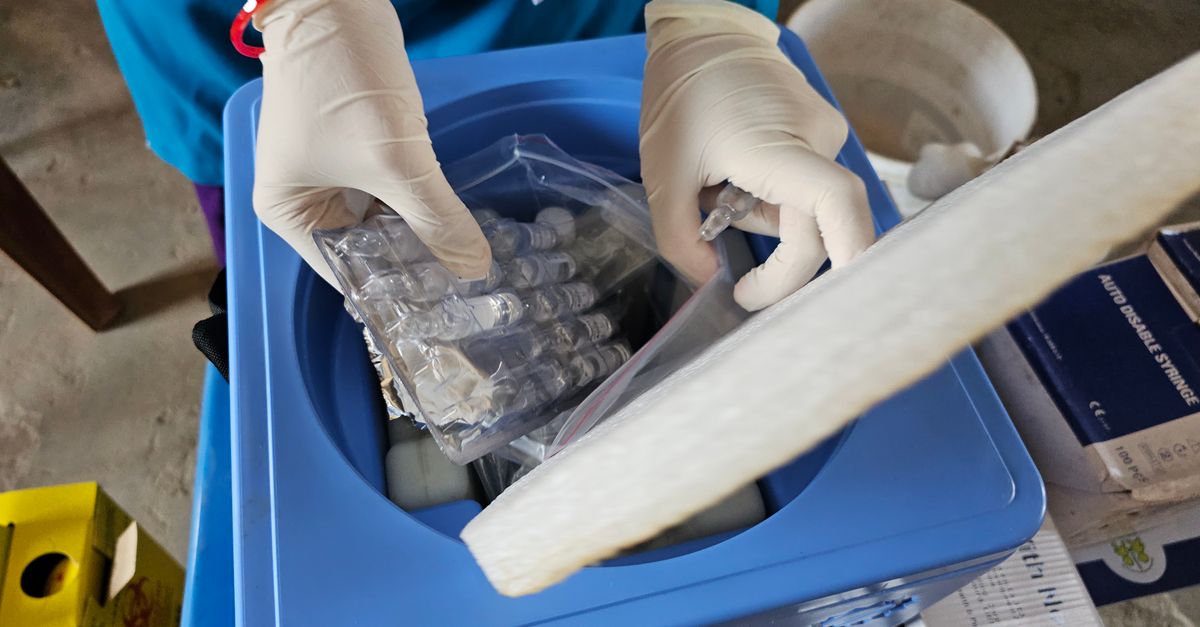
First, the shelf life problem. Most vaccines require refrigeration. On a Mars mission, you might not have a fridge that works for three years. Scientists are developing freeze-dried, room-temperature-stable vaccines that can be reconstituted with water. Think of them like astronaut ice cream, but for your immune system.
Second, the mutation speed. In microgravity, viruses mutate faster. A vaccine developed on Earth might be useless against a space-evolved strain by the time you reach the Red Planet. This is forcing researchers to create "universal" vaccines that target parts of the virus that don't mutate — the viral equivalent of aiming for the engine block instead of the license plate.
Third, the response time. Even if you have a vaccine, the immune system takes days to weeks to mount a full response. In space, that delay could be fatal. That’s why a new approach called "rapid-response vaccination" is gaining traction — using messenger RNA technology (the same tech behind some COVID-19 vaccines) to generate immunity in under 24 hours.

The Hidden Experiment Already Happening
Here’s the part that gives me chills. We’re already running a massive, uncontrolled experiment on the ISS right now. Every time a new crew arrives, they bring their Earth microbiome with them. The station’s own microbiome has been evolving for over two decades. We’ve accidentally created a closed ecosystem of alien bacteria.
When the SpaceX Crew Dragon first docked, it wasn't just delivering astronauts — it was delivering their colds, their gut bacteria, their skin flora. And the ISS responded. New bacterial strains appeared. Some disappeared. Scientists are watching this real-time evolution like hawks, taking samples and sequencing DNA, trying to predict what a "space plague" might look like.
The data from these experiments is already shaping the vaccine research. They’ve identified six bacterial species that consistently thrive in microgravity and have shown resistance to multiple antibiotics. Those six are now the primary targets for the first generation of space-specific vaccines.
Why This Matters for You (Yes, You)
You might be thinking, "Great, I live on Earth. I don't care about space vaccines." But here’s the thing: the technology being developed for space is going to revolutionize medicine down here.
The freeze-dried, room-temperature vaccines? Perfect for rural clinics in developing countries that lack cold storage. The rapid-response mRNA platform? Could be deployed within hours of a new pandemic emerging on Earth. The universal flu vaccine they’re designing for space? Might finally give us a single shot that protects against all seasonal strains.
The same way the Apollo program gave us memory foam and cordless tools, the space vaccine race is going to give us medical breakthroughs we can’t even imagine yet.
The Race Has Already Started
The European Space Agency just funded a €5 million project called "SpaceShield" specifically to develop a multi-pathogen vaccine for long-duration missions. NASA’s Human Research Program has made immune countermeasures a top-tier priority for their next funding cycle. Private companies like SpaceX are quietly funding their own research, because Elon Musk knows that a dead crew doesn't colonize Mars.
We’re probably 5-10 years away from the first human trial of a space-specific vaccine. But the clock is ticking. The Artemis missions to the Moon are scheduled for the late 2020s. Mars missions are targeted for the 2030s. Every astronaut who steps into a Starship will be flying without a net unless we solve this.
So the next time you see a rocket launch, remember: the real mission isn't just getting there. It's making sure the crew doesn't die from a sniffle.
What do you think? Are we overthinking the risks, or is this the single biggest threat to space exploration? Drop your thoughts in the comments — I read every single one.