Remember that scene in every sci-fi movie where the hero, against all odds, plugs a glowing crystal into a supercomputer and instantly cures a pandemic? For decades, that’s been pure fantasy. But what if I told you the race to build that kind of reality-defying machine isn’t just happening—it’s accelerating at a pace that’s leaving even experts breathless? This isn't about faster laptops; this is about rewriting the rules of reality itself to solve problems our current computers literally cannot comprehend.
We’re talking about the quantum computing race. And while the buzz often centers on breaking encryption or optimizing financial portfolios, the most profound, human-impacting revolutions are quietly brewing in medicine and materials science. Let’s be honest, the classical computers we use today are reaching their limits when faced with nature’s most fundamental puzzles. To model a single complex molecule accurately can take centuries of compute time. That’s a dead end. Quantum computing smashes through that wall.

The Qubit: Your Not-So-Secret Superpower
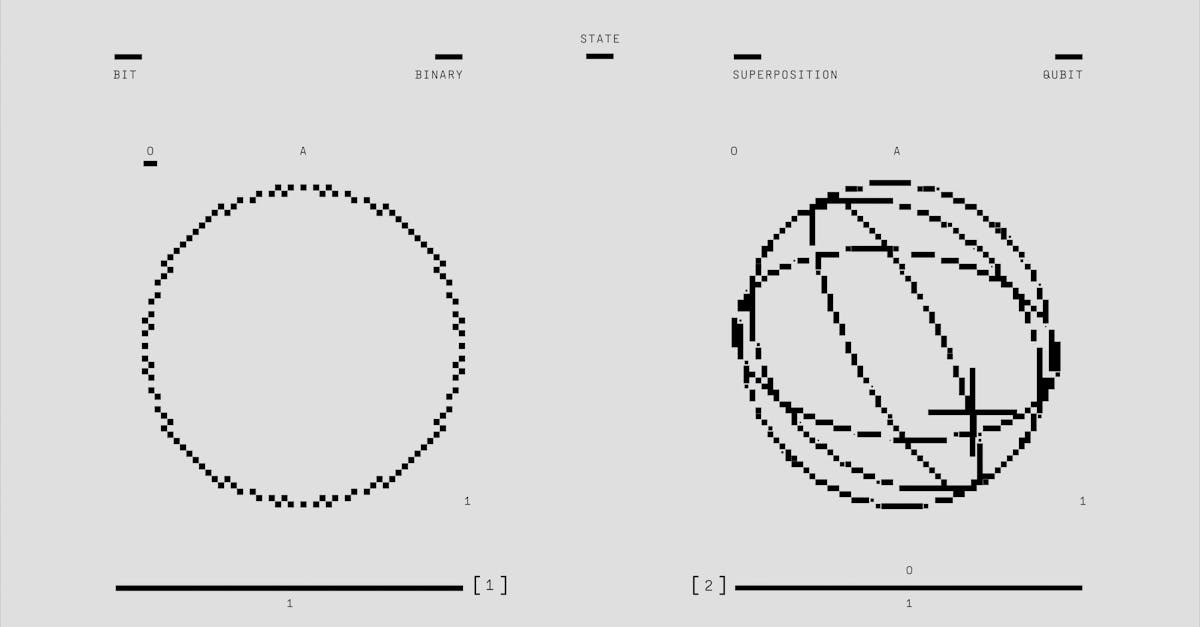
Here’s what most people miss. A classical computer bit is a light switch: definitively 0 or 1. A quantum bit, or qubit, is that same switch existing in a state of both 0 and 1 simultaneously (a superposition), and mysteriously linked to other qubits (entanglement). It sounds like magic, but it’s just physics operating at the subatomic level. This allows a quantum computer to explore a staggering number of possibilities at once.
Think of it like this: you’re in a maze. A classical computer must try each path, one by one, hitting dead ends. A quantum computer, in a sense, can try all paths simultaneously, finding the exit almost instantly. For medicine and materials, this means we can finally simulate the universe as it truly is: quantum.
The Prescription: Quantum-Powered Precision Medicine
I’ve found that the promise of "personalized medicine" has often felt hollow. We tailor diets and exercise, but at the molecular level, we’re still often guessing. Your body is a symphony of billions of molecules interacting in quantum mechanical dances. Classical computers can only watch this symphony from outside the concert hall, hearing muffled noise.
Quantum simulation changes everything. It lets us inside.
Drug Discovery on Steroids: Designing a new drug is like trying to craft a key for a lock you’ve never clearly seen. Researchers must physically synthesize and test millions of compounds—a process taking over a decade and costing billions. A quantum computer could model how a potential drug molecule interacts with every protein fold in a virus or cancer cell with near-perfect accuracy, virtually screening billions of compounds in days. We could rapidly design drugs for "undruggable" targets or personalize oncology treatments based on a patient’s unique protein expression. Decoding Protein Folding: Diseases like Alzheimer’s, Parkinson’s, and cystic fibrosis are linked to misfolded proteins. Predicting how a chain of amino acids folds into a 3D structure is a monstrously complex problem (so hard it has its own "Folding@Home" citizen-science project). Quantum computers are poised to crack it, unveiling the root causes of diseases and pathways to halt them.

Building Tomorrow, Atom by Atom
While medicine heals the body, materials science builds our world. And right now, we’re desperate for new materials. Better batteries for a renewable grid. Room-temperature superconductors for lossless energy. Efficient catalysts to pull carbon directly from the air. The bottleneck? We’re designing in the dark.
Material design is a quantum problem at its core. The properties of a substance—its strength, conductivity, reactivity—emerge from the collective quantum behavior of its electrons. Today, we discover materials through costly, slow trial and error. Quantum computing flips the script to predict-first, synthesize-later.
Imagine telling a quantum computer: "Find me a compound that is lightweight, stronger than titanium, and catalyzes ammonia production at ambient pressure." It could theoretically search the near-infinite landscape of possible atomic combinations and simulate the winner with precision. The economic and environmental implications are staggering. We could finally create that holy-grail battery, design ultra-efficient solar cells, or engineer plastics that truly biodegrade.
The Race and the Reality Check
Now, before we get too starry-eyed, let’s ground this in reality. The quantum computing race is a marathon with sprinters. Companies like Google, IBM, IonQ, and startups you’ve never heard of are pushing the limits of quantum hardware, battling decoherence (where qubits lose their magic state), and scaling from hundreds to millions of qubits. This is the noisy intermediate-scale quantum (NISQ) era—machines are powerful but error-prone.
The real heroes right now are the algorithm developers and quantum software companies. They’re crafting the tools—like quantum machine learning and hybrid quantum-classical algorithms—that will extract real-world value from these fragile, early machines. The revolution won’t start with a bang, but with a whisper: a slightly better catalyst design, a more accurate molecular simulation.

So, What Are We Really Waiting For?
This isn't just a technical competition; it's a paradigm shift in human capability. The nations and corporations that lead in quantum computing for science will likely lead in the creation of new industries, new medicines, and new solutions to our planet's greatest challenges.
The question isn't if quantum computing will revolutionize medicine and materials science, but when and who will bring those revolutions to our doorsteps. Will it be a bespoke cancer therapy designed for your genome in 2040? A battery that charges your EV in one minute in 2035? The timeline is uncertain, but the direction is not.
The race is on. And for the first time, we have a machine that can keep pace with the breathtaking complexity of nature itself. The future isn't just being written in code; it's being entangled, superimposed, and discovered in a state of glorious quantum possibility.
What problem would you ask a quantum computer to solve first?