The world didn’t stop being spiritual because it went digital. People still wrestle with fear, loneliness, guilt, purpose, and eternity—only now they search for answers on timelines, in comment sections, on YouTube, in WhatsApp chats, and inside online communities. That’s why digital evangelism is no longer “extra.” It’s part of the Great Commission strategy for our generation.
Digital evangelism is simply preaching the Gospel using digital channels—intentionally reaching real people online with real conversations that lead to salvation, growth, and discipleship. And the online church is the natural extension of that work: a structured, consistent spiritual community where believers are pastored, taught, cared for, and mobilized—online.
This article will show you why digital evangelism matters, how an online church actually works, and practical steps to start (or strengthen) yours—while recommending a tool like Cybev.io to help you do it with focus, structure, and consistency.

1) Why Digital Evangelism Matters More Than Ever
People now “live” online
Before someone visits a church building, they often:
- watch a clip,
- read a post,
- ask questions in DMs,
- follow your page for weeks,
- join an online group silently.
Digital evangelism meets them before the first handshake—and often becomes the bridge to a physical church (or a permanent online church family for those far away).
The Gospel can travel farther and faster
A single post can reach:
- your city,
- your nation,
- people you will never meet physically,
- and audiences who would never attend a traditional crusade.
It creates consistent discipleship pathways
Evangelism isn’t complete at salvation. The goal is new converts who become grounded disciples. Digital systems make it easier to:
- teach regularly,
- track progress,
- share resources,
- assign follow-up,
- build community.
It multiplies laborers
When your members learn digital outreach, you don’t just “have followers”—you raise evangelists who can each reach their own networks daily.
2) What Is an Online Church (Really)?
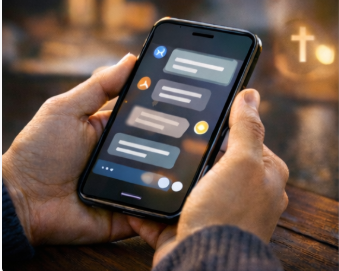
An online church is not just “streaming service.” Streaming is great—but church includes:
- the Word (consistent teaching)
- prayer (corporate and personal)
- fellowship (real relationships)
- pastoral care (counsel, follow-up, accountability)
- discipleship (growth structure)
- mission (evangelism and soul-winning culture)
A true online church answers questions like:
- How do new souls get welcomed and followed up?
- Where do people belong (cells, groups, classes)?
- How do members serve, give, grow, and evangelize?
- How do we build consistency beyond a Sunday stream?
Online church is simply church systems delivered through digital space—with the same seriousness, order, and love.
3) The Biggest Mistake People Make in Digital Evangelism
Many people think digital evangelism is only:
- posting flyers,
- sharing devotionals,
- uploading sermons.
Those are powerful tools—but the heart of evangelism is still people.
Digital evangelism works best when it includes:
- Content that attracts and teaches
- Conversation that leads to salvation (DMs, chats, comments)
- Community that disciples (groups, cells, classes, follow-up)
If you skip conversation and community, you may get views—but lose souls.
4) Practical Digital Evangelism Strategy That Produces Results
Here’s a simple, repeatable framework you can run weekly:
A. Daily “Seed” Content (visibility + value)
Post content that answers real spiritual questions:
- salvation
- healing
- faith
- purpose
- prayer
- identity in Christ
- Bible interpretations
Format ideas:
- short posts
- carousels/threads
- 60–90s clips
- testimonies
- “prayer for you today” posts
B. Daily “Harvest” Conversations (soul-winning)
Make it a rule:
- respond to comments,
- send warm DMs,
- invite people to a short call,
- offer prayer personally.
A simple DM flow:
- “Thanks for engaging. How can I pray for you today?”
- “Have you ever received Christ personally?”
- Share a clear salvation message + lead them in prayer
- Add them to a follow-up system + invite to online church community
C. Weekly “Gathering” (online service + prayer)
Set a consistent weekly schedule:
- teaching + worship + altar call + prayer
- make it easy for newcomers to join and be welcomed
D. Discipleship Pathway (new believer to mature believer)
Create clear steps:
- New believers class / foundation
- Small groups / cell system
- Prayer meetings
- Service teams (media, follow-up, outreach)
E. Measurement (what gets measured gets improved)
Track:
- number of conversations started
- salvations (and date)
- follow-up touchpoints
- attendance (online group + meetings)
- testimonies
5) Why You Need a Platform (Not Just Random Apps)
Using “anything available” can work at the beginning, but growth becomes painful when:
- links are scattered,
- follow-up is manual,
- your content is not organized,
- your community is split across many places,
- your outreach lacks structure.
That’s where a purpose-built tool helps—especially if you’re serious about building an online church.
6) How Cybev.io Helps Digital Evangelism and the Online Church
If your goal is consistent outreach + organized content + community growth, Cybev.io is the kind of platform you should consider because it’s built around the idea of cyber/digital evangelism and online ministry workflows.
Here are practical ways to use Cybev.io (without overcomplicating it):
✅ 1) Centralize your ministry identity
Instead of many scattered links, you can direct people to one consistent home base—your content, updates, and community entry points.
✅ 2) Publish Gospel content consistently
Make blogging and social-blogging part of your evangelism engine:
- longer teaching posts for depth
- shorter posts for daily engagement
- evergreen articles that rank on search over time
✅ 3) Build a clear “Join” pathway
Turn visitors into community members:
- “Join Online Bible Study”
- “Prayer & Counseling”
- “New Believers Start Here”
- “Cell/Group Community”
✅ 4) Support follow-up and discipleship structure
Your online church grows when people don’t fall through the cracks. Use your Cybev.io workflow to keep:
- newcomers connected
- content structured
- discipleship steps clear
Bottom line: if you want digital evangelism to be a lifestyle (not an occasional post), tools like Cybev.io help you stay consistent and organized.
7) What to Post (Content Pillars That Attract Souls)
Rotate these pillars weekly:
- Salvation & New Life
- Faith & Confession
- Healing & Miracles
- Prayer & The Holy Spirit
- Identity in Christ
- Bible Answers to Real Problems
- Testimonies (yours + others)
- Invitation Posts (join group / join service)
A simple schedule:
- Mon: Faith teaching
- Tue: Salvation call + DM outreach
- Wed: Prayer post + prayer room invite
- Thu: Healing testimony + scripture
- Fri: Short exhortation + invitation
- Sat: Outreach challenge to members
- Sun: Online service + altar call
8) The Future: Hybrid Church Growth (Online + On-Ground)
The strongest model isn’t “online vs physical.” It’s online + physical:
- online evangelism gathers people daily
- online church disciples them consistently
- physical services strengthen fellowship where possible
- everyone becomes a sender and a soul-winner
This is how you grow a church in a world where attention has moved digital.
9) Start Today: A Simple 7-Day Launch Plan
Day 1: Write your salvation post + invite people to DM for prayer
Day 2: Post a short teaching + ask a question to trigger comments
Day 3: Do 20 intentional DMs (prayer offer)
Day 4: Host 30 minutes online prayer (invite publicly)
Day 5: Share a testimony + clear altar call
Day 6: Create a “Join Our Online Church” post with your Cybev.io link
Day 7: Hold your first online gathering + welcome/follow-up process
Conclusion: The Gospel Must Meet People Where They Are
Digital evangelism isn’t a trend—it’s mission. And the online church isn’t a backup plan—it’s a frontline harvest field. If you’ll commit to consistent content, real conversations, and a discipleship community, you will see souls saved, believers trained, and leaders raised.





