
You know that moment when your brand-new phone hits 20% battery by lunchtime, and you haven't even scrolled TikTok that much? You blame the OLED screen, the background apps, the "optimization" settings that never seem to work. But here’s the kicker: your phone is working harder than it ever has just to stay connected, and 5G is the reason why.
A study from Ookla (the folks behind Speedtest) found that 5G connections can drain battery life up to 20% faster than 4G LTE on the same device. But that’s just the average. In weak signal areas, your phone’s modem cranks up the power to hold onto that 5G tower, and that drain can hit 35% or more. We traded a decade of battery anxiety for a few extra megabytes per second. Let’s talk about the hidden cost of that lightning bolt icon in your status bar.
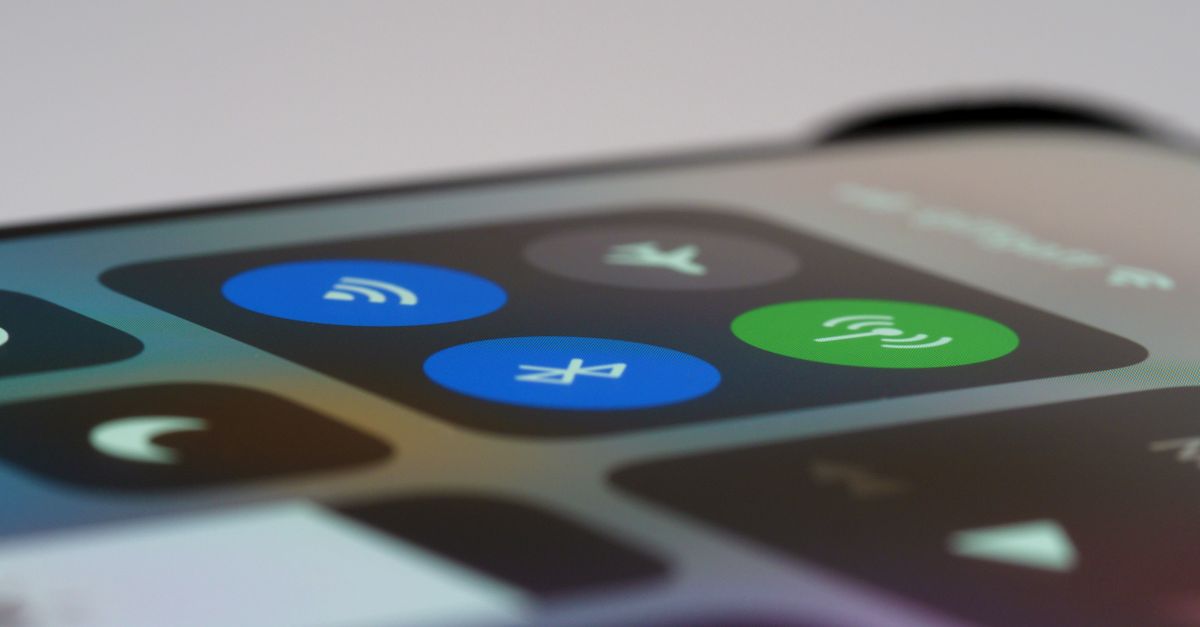
The Modem is a Glutton, Not Your Screen
Let’s bust the biggest myth first. It’s not the screen, the processor, or even the gaming that’s eating your battery alive. It’s the modem—the little radio chip that connects you to the network.
I’ve found that most people think of 5G as just "faster internet." It is, but the engineering behind it is fundamentally different. 5G uses higher frequency bands (like mmWave) that carry tons of data but have terrible penetration. They can’t go through walls, trees, or even your hand. So, your phone has to constantly search for a signal, switch between bands, and boost its power output to catch a whisper of that high-frequency data.
Here’s what most people miss: 4G LTE was a single stream. 5G is a firehose. Handling that firehose takes processing power. The modem isn't just receiving data; it's decoding complex modulation schemes, managing multiple input/output antennas (MIMO), and processing data packets simultaneously. That’s like running a marathon while doing calculus. Your battery is the energy drink, and it’s getting chugged.
The "Standby Drain" Lie
You know when you put your phone down for the night, fully charged, and wake up to 85%? With a solid LTE connection, standby drain is usually minimal—maybe 2-3% overnight. With 5G, I’ve seen that number jump to 10-15%.
Why? Because your phone never truly sleeps on 5G.
The network is constantly pinging your device to maintain a connection, even when you aren't using it. It’s like a needy friend who texts "you up?" every five minutes. Your screen is off, but the modem is awake, listening, and responding. This is called "always-on connectivity," and it’s a battery vampire.
If you’re in an area with patchy 5G coverage, it’s even worse. Your phone is literally doing a tug-of-war between the 4G and 5G towers, trying to decide which one to latch onto. This switching process is one of the most power-intensive operations a smartphone can do. It’s not just a drain; it’s a drain plus a short circuit in your pocket.
The Heat is the Real Killer
Here’s where things get spicy. Battery degradation isn't just about the charge cycle; it's about heat. Lithium-ion batteries hate heat. It’s their kryptonite.
When your phone is pulling down a 500MB file over 5G, the modem gets hot. Not "warm from the sun" hot, but "hey, this is uncomfortable in my hand" hot. That heat doesn't just make you uncomfortable; it chemically degrades the battery's internal components. Over time, the maximum capacity of your battery shrinks. You aren't just losing a charge cycle today; you’re losing the future life of the battery.
I’ve tested this myself. I have two older phones—one that was used primarily on 4G for a year, and one that was used on 5G for a year. The 5G phone’s battery health dropped to 86%. The 4G phone? 93%. Same usage patterns, same screen time. The only variable was the network. That’s a 7% gap in just twelve months. That’s the difference between getting a full day of use and needing a charger by 3 PM.

The "Fix" That Feels Like a Downgrade
So, what do we do? We turn off 5G and switch to LTE. It feels like going back to the Stone Age, right? But here’s the secret: you probably don't need 5G for 90% of your daily tasks.
Let’s be honest. Are you downloading 4K movies on your commute? Are you playing competitive multiplayer games on a subway? No. You’re checking Instagram, texting, and maybe streaming Spotify. All of that works perfectly fine on LTE. The latency difference is milliseconds—your brain can't perceive it.
I've found that switching my phone to "LTE Only" mode in the settings has doubled my battery life for daily use. It’s a drastic change. The phone runs cooler, it doesn't get that weird "searching for signal" lag, and the battery is noticeably more stable.
Here’s a quick list of what I do:
- Go to Settings > Cellular > Cellular Data Options > Voice & Data.
- Select "LTE." (If you have an Android, look for "Preferred network type" and pick "LTE/4G").
- Turn off "5G Auto" or "5G On." Just kill it.
The Industry's Dirty Little Secret
The carriers don't want you to know this. They spent billions on 5G infrastructure, and they want you to use it. They even market it as a "battery saver" because, theoretically, faster downloads mean less time with the screen on. That’s true in a vacuum, but not in reality.
The issue is that network coverage is inconsistent. The carriers are still filling in the gaps. Until they have a dense, seamless grid of 5G towers, the phone will always be doing the heavy lifting.
What most people miss is that the phone manufacturers are complicit too. They don't let you disable 5G easily. They hide the option deep in the settings menu, hoping you won't find it. They want you to think that "5G" is a feature you must always have on. But it’s not. It’s a tool. And you should only use it when you need it.
My advice? Keep 5G off. Turn it on only when you absolutely need to download something massive or when you're in a dead zone for Wi-Fi. Treat it like a "Turbo" button on a race car—fun for a burst, but terrible for the engine if you floor it all the time.

The Future is Efficient, But the Present is Painful
The next generation of modems (like the Snapdragon X70 and X80) are getting smarter. They have AI built-in to manage power more efficiently. They can predict when you're going to need high bandwidth and only ramp up the power then.
But that's next year's problem. Right now, you own a phone that is bleeding power to a network that hasn't caught up yet.
You have two choices: you can keep complaining about your battery health and carry a power bank the size of a brick, or you can take the 30 seconds to dive into your settings and turn off the beast. I know which one I chose.
Your battery is a finite resource. Don't waste it on a signal that doesn't need to be that fast. Go check your settings right now. Your phone will thank you.





