Here's the thing: by 2028, there will be over 25 billion connected IoT devices generating 79 zettabytes of data. That's not just a lot of cat videos and smart fridge notifications. That's a data tsunami. And guess what? The traditional cloud — those massive data centers in Virginia or Ireland — is about to drown.
Why? Because physics doesn't care about your fiber optic cable. Light travels at a fixed speed. Round-trip latency to a cloud server 1,000 miles away? That's a solid 30-50 milliseconds. For your Netflix buffer? Fine. For a self-driving car trying to avoid a pedestrian at 60 mph? That's a death sentence.
Enter the hero we didn't know we needed: Edge Computing.
Let's be honest — most people hear "edge computing" and think it's just a fancy term for a local server closet. It's not. It's a fundamental shift in how we process, analyze, and act on data. And when you combine it with 5G? You're looking at the biggest infrastructure revolution since the invention of the router.
The 5G Lie You've Been Sold
I've found that most tech coverage of 5G is... well, it's marketing fluff. "Faster downloads!" "Better streaming!" Sure, that's true. But that's like saying the invention of the printing press was "good for making pamphlets."
The real superpower of 5G isn't speed — it's ultra-low latency and massive device density. 5G promises 1-millisecond latency (theoretically) and the ability to connect 1 million devices per square kilometer. That's a 10x improvement over 4G.
But here's what most people miss: 5G alone is useless without edge computing. Think of 5G as the high-speed highway, and edge computing as the off-ramps. Without the off-ramps, all that traffic just... crashes into the same central cloud bottleneck.
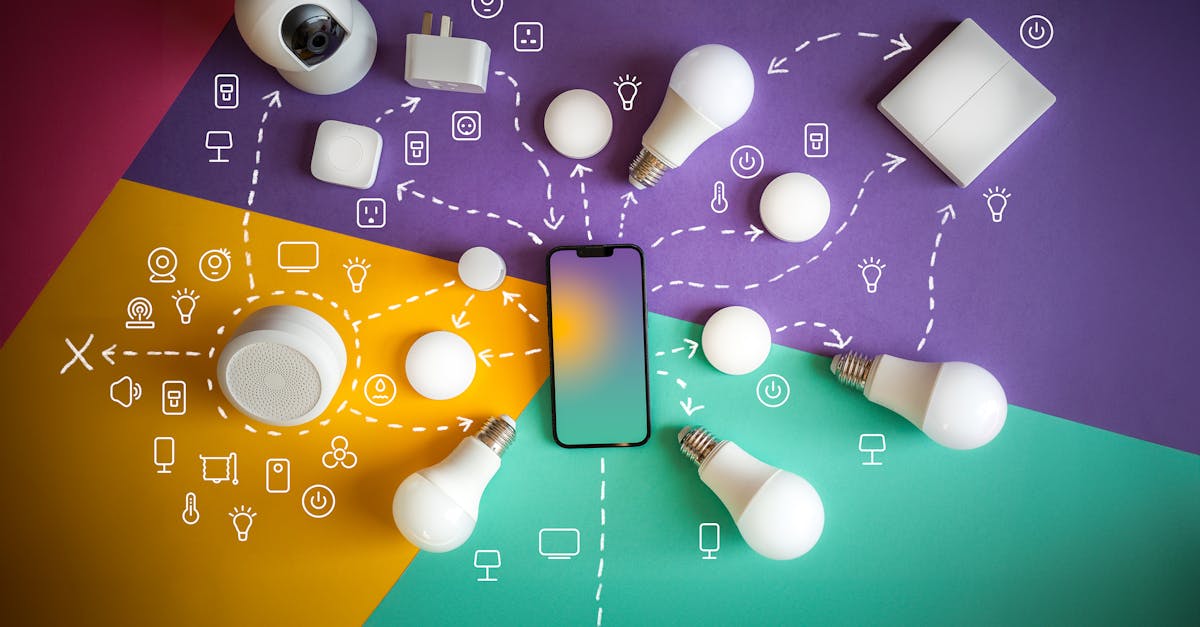
Why Your Cloud Bill is About to Explode (Unless You Edge)
I have a confession: I used to be a cloud absolutist. "Put everything in AWS/Azure/GCP — scale infinitely, pay for what you use." That worked when we were talking about websites and mobile apps.
But here's the dirty secret: cloud computing was designed for human-scale data. We generate gigabytes. Machines generate terabytes, petabytes, exabytes.
Let's do some quick math:
- A single autonomous vehicle generates 4 terabytes of data per day.
- A smart factory with 100 sensors generates 1 petabyte per year.
- A 4K security camera in a city streams 20 GB per day.
Edge computing flips the model: Process data where it's created. Filter. Analyze. Send only the insights to the cloud.
I've seen companies cut their cloud bills by 40-60% just by moving real-time processing to the edge. That's not a tweak — that's a business model transformation.
The 3 Industries That Will Be Obliterated (and Reborn)
Not everyone survives a tech revolution. Here are the three sectors where edge + 5G isn't optional — it's existential.
1. Healthcare: The End of "The Doctor Will See You Now"
Telemedicine today is a joke. A low-res video call, a grainy image of your throat, and a prescription. Edge computing changes this.
Imagine real-time surgical robotics where a specialist in Tokyo operates on a patient in rural Montana with under 5ms latency. That's not science fiction — that's happening in trials right now. Edge nodes process the video feed locally, while 5G provides the deterministic low-latency link.
Wearable health monitors? Today they sync to your phone, then to the cloud. With edge, your smartwatch can detect a cardiac arrhythmia and alert a local edge node that dispatches an ambulance before you even feel dizzy. The data never leaves your city.
2. Manufacturing: The Lights-Out Factory
I visited a factory last year that still used floppy disks to program CNC machines. No joke.
But the cutting edge? Predictive maintenance powered by edge AI. Sensors on every motor, bearing, and conveyor belt send vibration and temperature data to a local edge server. That server runs a machine learning model that predicts failure 72 hours in advance.
No cloud dependency. No internet outage kills production. The factory runs even if the WAN goes down. That's the edge promise: resilience through localization.

3. Retail: The Creepy (But Effective) Store of the Future
Amazon Go stores are the poster child, but the real action is less "walk out with your items" and more hyper-personalized real-time retail.
Edge cameras + 5G = a store that knows you're looking at the organic pasta, that you bought gluten-free bread last week, and that you have a loyalty coupon for marinara sauce. All processed locally — no video sent to the cloud.
Privacy concerns? Valid. But the tech is inevitable. Retailers who ignore edge will lose to those who offer a frictionless, personalized experience.
The Hidden Bottleneck Nobody Talks About
Let's pump the brakes for a second. Edge computing isn't all rainbows and low latency.
The dirty secret: edge infrastructure is a nightmare to manage.
You're not dealing with 10 servers in a climate-controlled data center. You're dealing with 10,000 tiny compute nodes in dusty factories, outdoor cabinets, and cell towers. No dedicated IT staff. No redundant cooling. Just a box in the heat.
Here's what I've learned from talking to engineers in the trenches:
- Power management is the #1 killer — edge nodes need to run on limited, often unreliable power.
- Security is harder — each edge node is a potential attack surface. You can't just air-gap them.
- Software updates are a logistics puzzle — how do you update 10,000 devices in the field without breaking anything?
What Happens When 6G Arrives?
I know, I know — 5G isn't even fully deployed yet. But the research labs are already working on 6G.
Here's the prediction: 6G will be the first mobile network designed from the ground up for edge computing. It won't just connect devices to a network — it will integrate compute, storage, and networking into a single fabric.
Think of it as "distributed cloud" — the edge becomes the network, and the network becomes the edge. Your phone won't just be a radio; it will be a compute node that can share processing power with nearby devices.
The implications? Your phone could help process a traffic camera's AI model while sitting in your pocket. Your car could loan its GPU to a nearby drone. The network itself becomes a supercomputer.
The Only Question That Matters
Here's where I get brutally honest with you.
Edge computing isn't a trend. It's not a buzzword. It's the inevitable architecture of a world where data is generated faster than we can transport it.
The only question is: Are you building for the edge, or are you building for the past?
If you're a developer: learn edge-native frameworks. If you're a business owner: start with one use case — predictive maintenance, real-time video analytics, or low-latency control. If you're just curious: start playing with a Raspberry Pi and an edge ML library.
The cloud isn't going away. But it's about to become the backup dancer, not the lead singer.
The edge is where the action is. And the action is happening right now.