
Let’s be brutally honest for a second: the mainstream sci-fi conversation is stuck in a time loop. It’s always Stranger Things, The Expanse, or a twenty-year-old reference to Battlestar Galactica. Don’t get me wrong—they’re great. But treating them as the entire genre is like saying pizza is the only food worth eating. You’re missing out on a universe of flavor.
I’ve found that the most profound, weird, and intellectually stimulating stories are often hiding in plain sight, buried by algorithms or niche audiences. They’re the shows that didn’t get a viral moment but instead built a deeply loyal, almost secretive, fanbase. These are the series that take real swings, that use the framework of sci-fi to explore philosophy, grief, and the human condition without a safety net.
So, before 2025 adds another layer of must-watch content to your pile, here are five severely underrated sci-fi shows that deserve your screen time.
The Spy Thriller That Doubled Down on Existential Dread
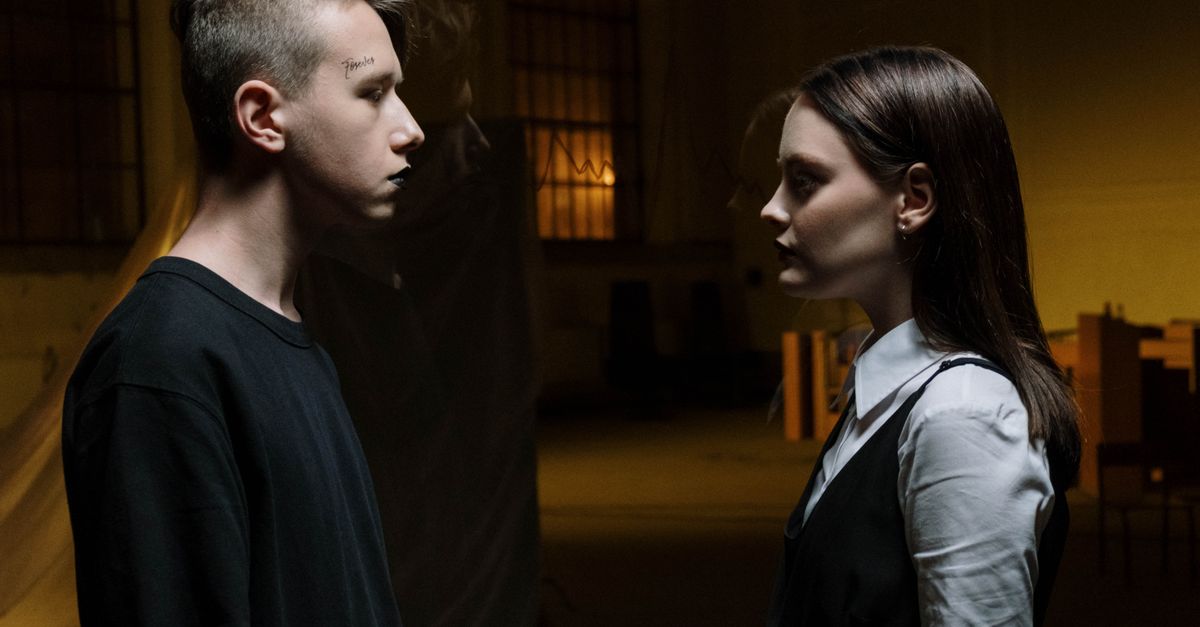
If you took the Cold War paranoia of a John le Carré novel and smashed it into a quantum physics textbook, you’d get Counterpart. Starring the incomparable J.K. Simmons in dual roles, the premise seems simple: a hidden crossing to a parallel Earth, created during the Cold War, exists beneath a Berlin UN agency. But here’s what most people miss: this isn’t a show about flashy alternate realities with zeppelins and steam-tech. It’s a chilling, slow-burn character study.
The brilliance is in its focus. The “sci-fi” is merely the inciting incident. The real story is about the choices we make, the people we become, and the haunting question: What if you met the you that took the other path? Simmons plays both Howard Silk, a meek bureaucratic paper-pusher from our world, and his counterpart from the other side—a ruthless, trained spy. Their interactions are masterclasses in acting. The show uses its dual-world structure to explore themes of identity, regret, and diplomacy with a tension that most thrillers can only dream of. It was cancelled after two seasons, but it tells a complete, devastating, and profoundly smart story. It’s the thinking person’s sci-fi thriller.
A Space Western That Mastered the Art of the Slow Reveal
Everyone knows Firefly. But what if I told you there’s a show that captured that ragtag-crew-on-a-spaceship magic while weaving a mystery so dense and compelling it makes Lost look straightforward? Enter The OA. Okay, technically it’s not just a “space western,” but stick with me.
Created by Brit Marling and Zal Batmanglij, The OA is arguably the most criminally cancelled show of the last decade. Its first season is a grounded, modern-day mystery about a blind woman who reappears after seven years, now with her sight restored, and recruits five unlikely people to help her prevent a great tragedy. It’s weird, spiritual, and deeply human. Then, the second season explodes the narrative into a multiverse of ideas—touching on everything from private detective noir to quantum consciousness. It is, at its heart, a show about the physics of faith and the dimensions of storytelling.
Was it bizarre? Absolutely. Did it have interpretive dance as a plot device? You bet. But it was also breathtakingly original, emotionally raw, and built a mythology with staggering confidence. It’s a show that demands you surrender to its rhythm. The cancellation after a massive cliffhanger is a cultural wound, but the journey is so singular it’s still essential viewing.
The Time Travel Comedy That Understood Chaos Theory Best
Time travel shows often get bogged down in their own rules. The show that got it right isn’t about rules at all—it’s about chaos. I’m talking about Future Man, the raunchy, hilarious, and surprisingly heartfelt Hulu series that is one of the best comedies of the last ten years, period.
On the surface, it’s a parody of 80s sci-fi and video game culture. A janitor named Josh (Josh Hutcherson) beats a supposedly impossible game, only to have two warriors from the future show up and tell him he’s the savior of humanity. What follows is a wildly inconsistent, deliberately stupid, and brilliantly clever romp through time. The genius of Future Man is that every time you think you know its formula, it changes the game. One episode they’re in the 1960s trying to prevent the creation of a pathogenic STD, the next they’re in a literal television show within the show.
But beneath the dick jokes and celebrity cameos (hello, Glenn from Walking Dead as a hilarious version of himself) is a shockingly smart take on cause and effect. Every action has massive, unintended consequences. Characters evolve in ridiculous yet meaningful ways. It’s a show that respects neither timelines nor its own characters, and that’s why it’s so liberating. It’s the anarchic spirit of sci-fi, fully realized.
The Quiet Apocalypse That Focused on Survival, Not Spectacle
We’re drowning in zombie shows and dystopian landscapes. But The Last Man on Earth? No, not that one. Let’s talk about Station Eleven. I know, some call it a miniseries, but its impact is so vast it belongs on this list.
Based on the brilliant novel by Emily St. John Mandel, this HBO Max show follows a traveling Shakespearean theatre troupe two decades after a flu pandemic wiped out most of civilization. The immediate hook is the stunning, non-linear storytelling, weaving between the immediate collapse and the fragile community 20 years later. But the real sci-fi element is its argument for art as survival technology.
In a genre obsessed with the hardware of survival—guns, bunkers, governments—Station Eleven posits that the software of the human soul—art, memory, and connection—is what truly preserves us. It’s a melancholic, beautiful, and ultimately hopeful poem about what we carry forward. The performance by Mackenzie Davis as the adult Kirsten, and the haunting presence of the graphic novel Station Eleven within the show, create layers of meaning most post-apocalyptic tales never approach. It’s less about the world ending, and more about the delicate, beautiful things that stubbornly persist.

The Corporate Satire That Predated Our AI Anxiety
Before Severance made corporate dystopia chic, there was Devs. Alex Garland’s limited series for FX is a hypnotic, terrifying, and philosophically dense puzzle box. It follows Lily Chan (Sonoya Mizuno), a software engineer at a cutting-edge quantum computing company called Amaya, who investigates the secretive “Devs” division after her boyfriend’s mysterious death.
Devs is sci-fi as tone poem. The score, the visuals, the oppressive silences—they all build a mood of deterministic dread. The show grapples with the idea of a universe governed by immutable laws, where free will is an illusion and every particle’s path can be predicted… and seen. The Deus ex Machina here isn’t a god, but a machine that can render the past and future with perfect clarity.
It’s a slow, demanding watch. It’s more interested in the implications of its ideas than car chases. But in an era where we’re all nervously side-eyeing AI, Devs asks the fundamental questions: If we could know everything, should we? And what’s left of us if our choices aren’t really choices at all? It’s a breathtaking, cerebral, and unforgettable experience.
Binging the usual suspects is comfortable. But sci-fi, at its best, should be disruptive. It should make you uncomfortable, make you think, and show you reflections of our world in its most distorted mirrors. These five shows—from the espionage of Counterpart to the anarchic time loops of Future Man—do exactly that. They prove that the genre’s beating heart isn’t always in the biggest budgets or the loudest explosions. Sometimes, it’s in a quiet conversation between two versions of the same man, or in a Shakespearean soliloquy delivered in a crumbling airport.
So, what’s your next move? Go back to the algorithm’s top ten? Or dive into the hidden layers where real narrative innovation is happening? The choice, for now at least, is still yours.
Follow us YouTube. Follow for more great content!





