
Let me tell you something about walking into a classroom in 2025. It smells the same — that mix of dry-erase markers, floor wax, and whatever someone microwaved in the staff room. But everything else? Different. I've been watching classrooms shift for the better part of a decade, and this year feels like the one where all those "someday" conversations finally became Monday morning reality.
If you're an educator, an administrator, or a parent who volunteers at the school gate, you've probably felt the ground moving. Here's what's actually happening — not the conference-slide version, but the real classroom trends shaping 2025 that nobody's spelling out clearly.
The AI Elephant Is Now Sitting at the Front Desk
Remember when the big debate was whether to ban ChatGPT? That ship has sailed, and honestly, thank goodness. The 2025 classroom treats AI literacy the way we treated typing class in the 90s — as a basic survival skill. The smart schools aren't policing chatbots; they're teaching students to interrogate them. "Where did this answer come from? Who's missing from this dataset? What's the lazy shortcut here?"
Here's what most people miss: the real shift isn't students using AI. It's teachers using it to reclaim their evenings. Lesson planning, differentiation, drafting parent emails — the grunt work is getting automated so the human work can finally breathe. I've found that the educators thriving right now are the ones who treat AI like a sharp kitchen knife: respect it, learn it, don't hand it to a toddler unsupervised.
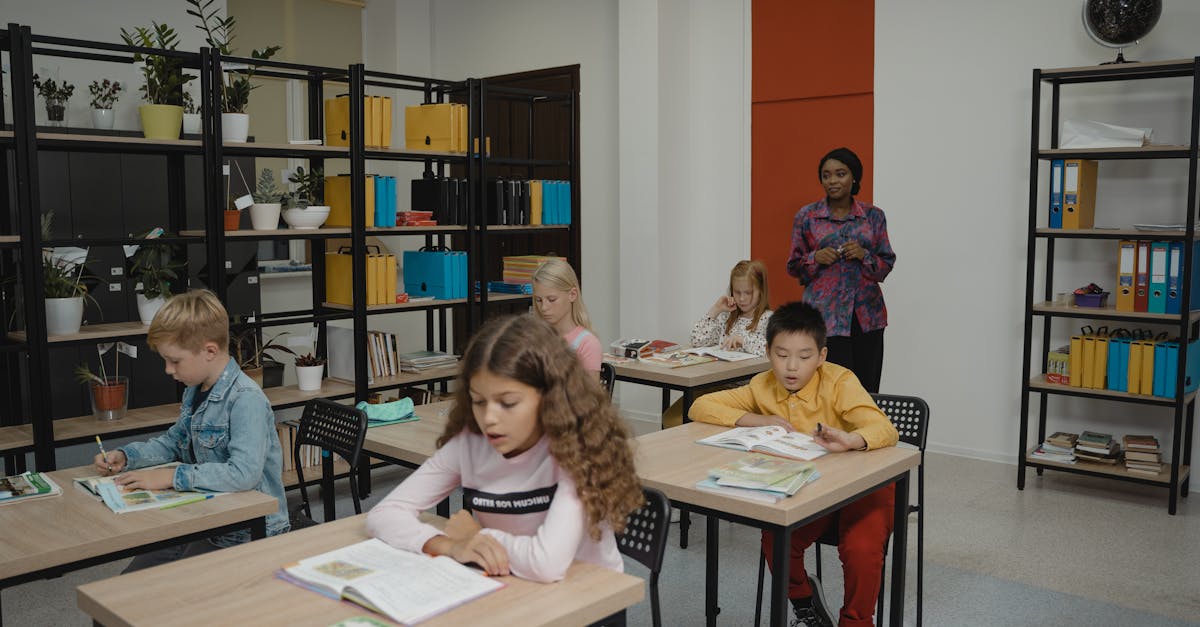
Cell Phones Get the Boot (For Real This Time)
Let's be honest — for years, "phone-free classrooms" meant a laminated sign and a lot of wishful thinking. In 2025, it means magnetic pouches, locked caddies, and actual state policy. Several countries have pushed phone restrictions into law, and the early data is genuinely surprising: test scores nudging up, hallway drama cooling down, and kids rediscovering the lost art of eye contact.
Is it a silver bullet? No. But the phone-free classroom movement has done something subtler and more valuable — it gave teachers permission to stop negotiating the same battle forty times a day. If your school hasn't set a policy yet, this is the year to stop kicking that particular can down the corridor.
Flexible Seating Grows Up
The wobble stools and beanbags used to feel like a Pinterest experiment. Now the science has caught up, and flexible classrooms are being designed around something radical: student agency. Standing desks for the kids who think better upright. Quiet corners for the ones who need to escape the noise. It turns out "sit still and face forward for six hours" was never a law of nature — just a habit we confused for one.
The catch? Flexible seating only works when classroom management flexes with it. I've seen gorgeous classrooms turn into chaos because the seating changed but the routines didn't. Furniture is the easy part. Culture is the work.
Micro-Credentials and Skills Badges Are Everywhere
High schoolers in 2025 aren't just collecting grades — they're stacking micro-credentials. A digital badge for public speaking. A certificate for coding. A verified portfolio of the podcast they actually produced. Employers and colleges are starting to pay attention, which means the transcript is slowly losing its monopoly on "proof of ability."
I love this trend, but I'll add a personal caveat: badges are only worth something if the learning behind them is real. I've seen schools hand out credentials like party favors and wonder why nobody respects them. The currency here is rigor, not graphics.
Wellbeing Moves From Poster to Policy
Every school had a "be kind" poster in 2015. In 2025, the smart ones have trauma-informed practices, scheduled brain breaks that aren't treated as lost instructional time, and counselors who actually get to see students. The data is blunt: you can't teach a nervous system that's stuck in survival mode.
Here's the part I find genuinely hopeful — wellbeing is no longer framed as a soft extra. It's showing up in timetables, budgets, and staff training. When a school treats regulation as a prerequisite for learning rather than a distraction from it, everything downstream improves.
The Classroom Without Walls
Blended and hybrid learning has matured into something less flashy and far more useful. It's not about kids on webcams all day — it's about a snow day that no longer becomes a lost day, guest speakers from three time zones away, and students who can revisit the lesson video at 9 p.m. when their brain finally switches on.
The catch nobody mentions? Hybrid models demand excellent communication. The schools doing it well have clear expectations, simple platforms, and teachers who aren't expected to do twice the work for the same pay. When those pieces line up, the walls genuinely come down. When they don't, it's just chaos with a login screen.
So, What Now?
Here's my honest take: none of these ten trends matter if we treat them as decorations rather than decisions. A phone pouch without a relationship-building culture is just a bag. AI in the classroom without curiosity is just autopilot with better branding.
The educators shaping 2025 are asking a better question than "What's the new tool?" They're asking, "What do my students actually need to be human and capable in this world?" Every trend above is just a different way of answering that.
So here's your homework — and I mean this sincerely. Pick one trend from this list. Just one. Talk to your students about it this week. Not at them — with them. Ask what's working, what's nonsense, and what they wish adults understood. The answers will tell you more than any conference keynote ever could.
The future of the classroom isn't arriving on a schedule. It's being built right now, one honest conversation at a time. Which one are you starting?