
I remember the exact moment I realized traditional schooling wasn’t cutting it. My nephew, a bright eight-year-old, came home from school one day and announced, “Uncle, I learned that the capital of Ghana is Accra.” That’s fine. But then he looked at me with complete seriousness and asked, “But why is it the capital? Is it because it’s the biggest? Or the oldest?” His teacher hadn’t covered that. She had just drilled the fact. And in that moment, I felt a pang of frustration. We were teaching him what to think, not how to think.
That’s when I started digging. I wanted to find the hidden gems around Ho, the capital of the Volta Region in Ghana. Not the tourist spots—those are easy. I wanted the educational gems. The places, people, and experiences that turn a passive learner into an active thinker. And let me tell you, what I found completely blew my mind.

The “University” That Isn’t a University: Learning at the Ho Market
Let’s be honest. Most of us think education happens in a classroom with a whiteboard, a strict teacher, and a bell that rings every forty-five minutes. But if you spend a morning at the Ho Central Market, you’ll realize that’s just one version of the truth.
I spent a Saturday there with a local friend, Kofi, who runs a small fabric stall. He didn’t teach me math from a textbook. He taught me mental arithmetic at lightning speed. I watched him calculate the total cost for a customer buying six yards of cloth, three spools of thread, and a set of buttons—in his head, in under five seconds. He wasn’t using a calculator. He wasn’t using a pen. He was using a system of patterns and shortcuts he’d developed over twenty years.
Here’s what most people miss: the market is a living laboratory of economics, negotiation, and social psychology. Every transaction is a lesson.
- Economics in action: You see supply and demand play out in real time. When the yam harvest is low, prices climb. When it’s high, they drop. No textbook needed.
- Negotiation skills: Kids as young as ten learn to haggle. They learn to read body language, understand value, and walk away when the deal isn’t right. That’s emotional intelligence training you can’t get from a lecture.
- Cultural literacy: You hear five different languages in one hour. You learn the unspoken rules of respect, humor, and community.
The Shocking Power of the Volta River: A Classroom of Physics and Patience
Most people see the Volta River and think “scenic boat ride” or “fishing.” I see a physics and engineering textbook that’s been open for centuries.
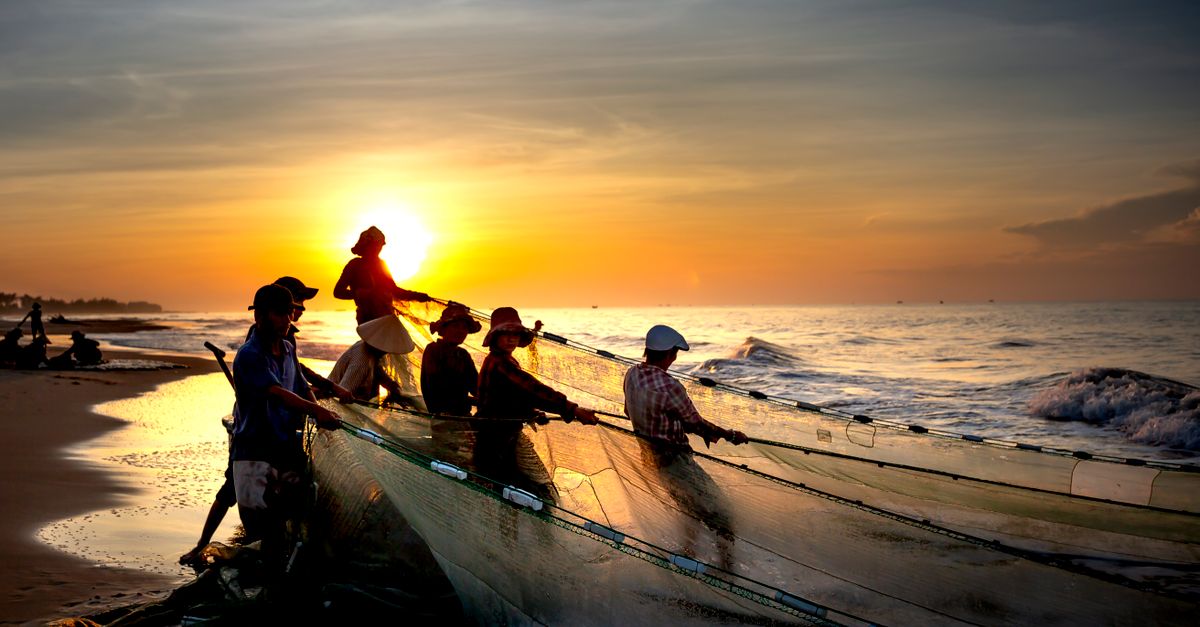
I took a group of teenagers on a field trip to the riverbank near Ho. We weren’t there to swim. We were there to watch the fishermen. These men don’t have sonar. They don’t have GPS. They know the river by the way the current moves, by the color of the water, and by the behavior of the birds.
One fisherman, a quiet man named Togbe, showed us how he builds his canoe. He explained why the wood is curved a certain way—to cut through the water efficiently. He talked about buoyancy, balance, and drag. He didn’t use those words. He said, “If the boat is too flat, it tips. If it’s too round, it doesn’t go straight.” That’s practical engineering.
Here’s the secret: The river teaches patience. You can’t rush the tide. You can’t force a fish to bite. In a world obsessed with instant gratification, spending a day on the Volta teaches a child (and an adult) that some lessons take time. Some knowledge comes from waiting, observing, and adapting.
If you’re homeschooling a child in the Ho area, or if you’re a teacher looking for a fresh approach, build a curriculum around the river. Study the water cycle. Study local fish species. Study the history of the river as a trade route. The Volta isn’t just a beautiful landmark; it’s a hidden classroom that most people drive past without a second thought.
The “Secret” Library in a Church Basement: Inside the Agorhomie Community Center
Let’s get real for a second. How many of us have walked past a small, unassuming church or community center and thought, “Nothing interesting happens there”? I almost did. But a friend dragged me into the Agorhomie Community Center on a Tuesday afternoon, and I found something truly special.
Tucked away in the basement, behind a stack of old hymnals, is a tiny library. I’m talking about maybe 300 books, mismatched shelves, and a single fan that sounds like it’s about to take flight. But the energy in that room was electric.
A retired teacher named Madam Adzo runs it. She doesn’t get paid. She volunteers her time because she believes in the power of stories. She told me, “The children here don’t have internet. They don’t have tablets. But they have imagination. I just give them the keys.”
What she’s doing is revolutionary. She doesn’t just hand out books. She runs reading circles where kids debate the characters’ choices. She hosts storytelling nights where children write their own endings. She’s created a safe space for curiosity.
I sat in on one session. A ten-year-old girl named Esi was reading a book about a girl who travels to the moon. Madam Adzo stopped her and asked, “Esi, if you went to the moon, what would you pack in your bag?” The girl thought for a moment and said, “A mango tree seed, so I can grow food there.” That’s creative thinking. That’s problem-solving. That’s education.
Most people miss this: You don’t need a million-dollar STEM lab to teach critical thinking. You need a passionate adult, a few good books, and the freedom to ask “what if?” This hidden gem is a blueprint for what community-based education can look like. If you’re in Ho, find Madam Adzo. If you’re elsewhere, start your own version of this. It costs almost nothing and changes everything.
The 3 Surprising Lessons I Learned from a Local Akpeteshie Distiller
This one might raise an eyebrow, but hear me out. I’m not advocating drinking. I’m advocating learning. Akpeteshie is a local gin, and the process of making it is a masterclass in chemistry, patience, and resourcefulness.
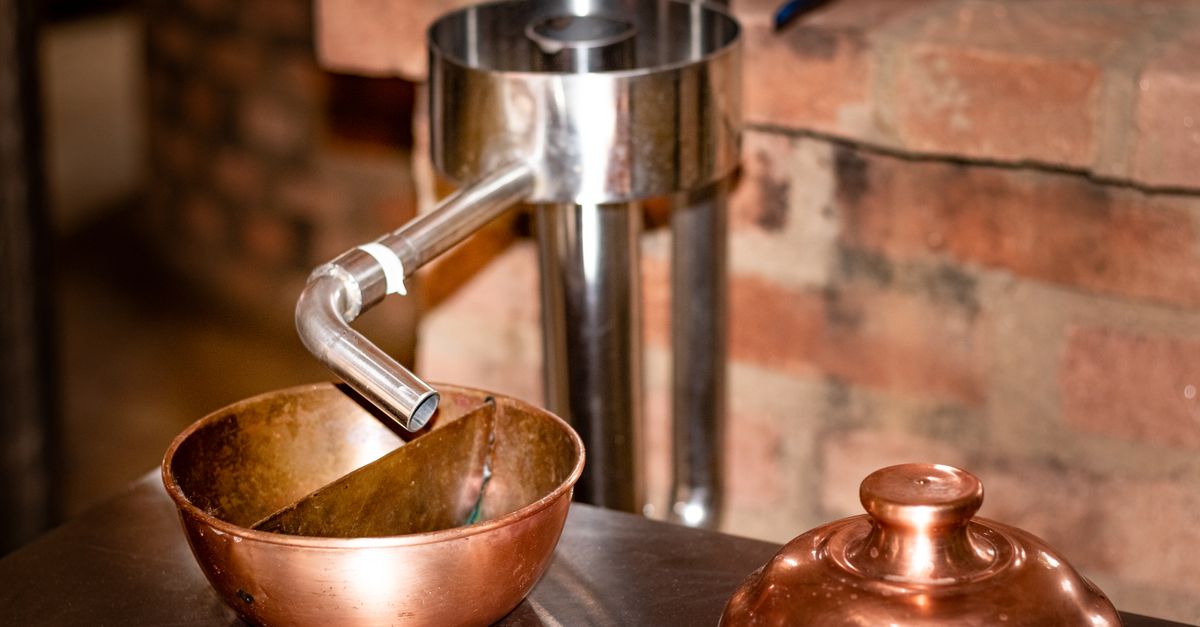
I met a distiller named Yao in a village just outside Ho. He showed me his setup: a large pot, a copper pipe, and a cooling barrel. He explained how fermentation turns sugar into alcohol. He showed me how the temperature of the fire affects the quality of the spirit. He talked about the exact moment to stop the distillation—too early, and it’s weak; too late, and it’s bitter.
This man never went to university. But he understands phase changes, boiling points, and condensation better than most high school graduates. Why? Because he learned by doing. He learned by failing. He told me about his first batch, which “tasted like regret.” He adjusted, tried again, and eventually perfected his craft.
Here’s what I took away:
- Failure is a prerequisite for mastery. Yao didn’t give up after his first bad batch. He analyzed what went wrong. That’s the scientific method in its purest form.
- Resource constraints breed creativity. He couldn’t afford a fancy distillery, so he built one from scrap metal. He turned a limitation into an innovation.
- Local knowledge is undervalued. We look to Google for answers, but the man down the street has knowledge that has been passed down for generations. That’s a hidden educational treasure.
Why You Should Rethink “Homework” Inside the Volta Region’s Forests
I’ll be blunt: traditional homework is often busywork. Worksheets, memorization, repetition. It kills curiosity. But there’s a different kind of “homework” happening in the forests around Ho.
The Tafi Atome Monkey Sanctuary isn’t just a place to see Mona monkeys. It’s a living ecosystem of lessons. Local guides, many of whom are former hunters turned conservationists, teach visitors about the forest. They explain the symbiotic relationship between the trees and the monkeys. They show you which plants have medicinal properties. They tell you the history of the sacred grove and why the community chose to protect it.
I watched a group of schoolchildren on a field trip there. Instead of filling out a worksheet, they were asked to draw a map of the forest from memory after the tour. Then they had to explain why certain animals lived in certain areas. That’s geography. That’s biology. That’s critical thinking.
Here’s the truth: The best homework is the kind that makes you look at the world differently. Instead of assigning a chapter to read, assign a walk in the forest. Ask a child to find three different types of leaves and explain why they’re different. Ask them to observe a bird for ten minutes and write down its behavior. That’s active learning. That’s the hidden gem of outdoor education that Ho offers in abundance.
If you’re a parent or educator, stop treating the forest as a weekend getaway. Treat it as a classroom. The monkeys, the trees, the insects—they are all teachers waiting to be heard.
Your Turn: Finding the Gems in Your Own Backyard
I’ve shared some of my favorite hidden gems around Ho. But here’s the thing: you don’t have to be in Ho to find them. The principle is universal.
The best education isn’t locked inside a building. It’s in the market, the river, the library, the distillery, and the forest. It’s in the people who have spent decades mastering a craft, the elders who tell stories, and the children who ask questions we’ve forgotten to ask.
So here’s my challenge to you: Go find your own hidden gems. Talk to the woman selling vegetables. Ask the fisherman about the river. Visit a local workshop. Take a child to a place they’ve never been and let them lead the exploration.
Education is not a destination. It’s a way of seeing the world. And the world around Ho—around your own city or village—is filled with classrooms that don’t have walls.
Stop waiting for permission. Start learning.