
Here’s the thing: over 70% of music teachers say they’ve never used AI in their lessons. That’s not a typo. In 2024, while the rest of the world is automating spreadsheets and generating art from text prompts, the majority of music educators are still handing out photocopied sheet music and praying the Wi-Fi holds up during a YouTube playback. But here’s the kicker — the 30% who have adopted AI are producing students who can compose a fugue in 10 minutes, analyze harmonic structures by ear, and even write lyrics that don’t suck.
I’m not here to tell you AI is going to replace your piano teacher or your drummer. Let’s be honest — no algorithm can replicate the soul of a live performance. But if you think AI adoption in education is just about cheating on essays or generating midi loops, you’re missing the real revolution. AI adoption in education is quietly rewriting how we learn, teach, and feel music. And it’s not as scary as you think.
The Secret Weapon You Already Have in Your Pocket
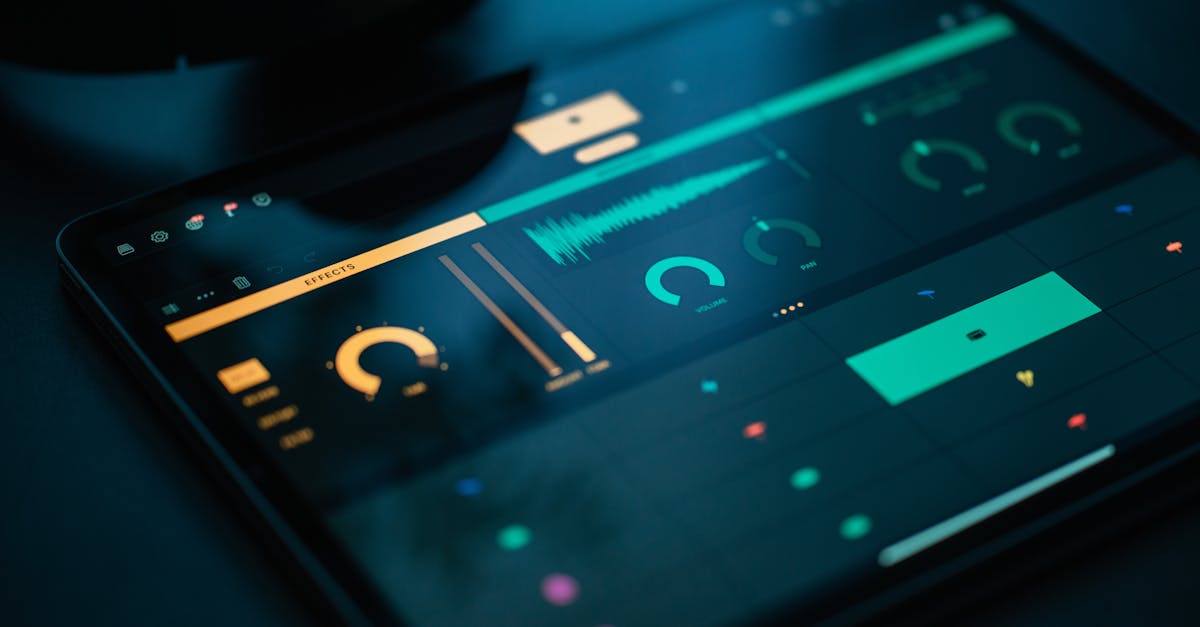
I’ve found that most people overcomplicate AI. They imagine Skynet with a metronome. But the reality is simpler — and more powerful. Your smartphone is already an AI music tutor. Apps like Moises can strip vocals from any track in real-time, letting students isolate bass lines or practice karaoke with a backing track that adapts to their tempo. Soundtrap uses AI to suggest chord progressions based on a melody you hum. Yousician listens to you play guitar and gives instant feedback on timing and pitch.
Here’s what most people miss: AI adoption in education isn’t about replacing teachers — it’s about giving them superpowers. A single piano teacher can’t give 30 students individual ear-training drills in a 45-minute class. But an AI app can. While the teacher works with one student on dynamics, the rest of the class can be using AI to analyze a Mozart sonata or practice sight-reading with adaptive difficulty.
I’ve watched a middle school band go from “can’t keep a steady beat” to “recording a multi-track cover of Radiohead” in six weeks. The secret? AI tools handled the boring stuff — rhythm drills, pitch correction, even suggesting instrument arrangements — so the teacher could focus on creativity and expression. That’s the hidden truth of AI adoption in education: it frees humans to be human.
The 3 Things AI Does Better Than Any Human Teacher (Yes, Really)
I know what you’re thinking — “Made, nothing can replace a human teacher’s intuition.” And you’re right. But let’s be real about what humans aren’t great at. Here are three areas where AI destroys traditional methods:
- Personalized Repetition — Humans get bored. AI doesn’t. If a student struggles with a specific rhythm pattern, AI can generate hundreds of variations at the exact difficulty level needed. No judgment. No sighing. Just endless, patient practice.
- Instant Harmonic Analysis — You know how long it takes to explain secondary dominants? AI can visualize chord functions in real-time, showing students the skeleton of a song while they listen. I’ve seen 12-year-olds understand jazz harmony in 20 minutes using AI-powered tools like Chordify or Hooktheory.
- Creative Block Busters — Every musician hits a wall. AI can generate 50 different chord progressions, lyric prompts, or rhythmic variations in seconds. It’s not art — it’s fuel. You take the spark, AI brings the kindling.
Why Most Music Schools Are Still in the 1990s
Here’s a truth that stings: many music education programs are teaching students for a world that no longer exists. They focus on repertoire, notation, and theory — all valuable — but ignore the skills students actually need today: recording, producing, collaborating remotely, and understanding how music works in a digital landscape.
I’ve sat in faculty meetings where the biggest debate was whether to allow iPads in the practice room. Meanwhile, the students are already using AI to remix Beethoven with trap beats. The disconnect is real.
But there’s hope. A handful of forward-thinking institutions are embracing AI adoption in education head-on. Berklee College of Music now offers courses on “AI and Music Creation.” The Royal Academy of Music uses AI to analyze performance anxiety patterns. Even public schools in Finland are using AI to help students compose their own pieces before they can read music.
Here’s what I tell skeptical teachers: You don’t have to become a programmer. You just have to be curious. Start with one tool. Try MuseNet for generating backing tracks. Use Otter.ai to transcribe and analyze student performances. The learning curve is shorter than you think, and the payoff is massive.

The Hidden Danger Nobody Talks About
Alright, let’s get real. AI adoption in education isn’t all sunshine and perfect pitch. There’s a dark side — and it’s not Skynet.
The real danger is homogenization. If every student uses the same AI tools to generate chord progressions or fix timing, we risk losing the quirky, imperfect, human elements that make music interesting. Think about your favorite song. Chances are, it has a slightly rushed snare, a vocal that cracks on a high note, or a guitar solo that’s technically sloppy but emotionally perfect. AI polishes that away.
I’ve seen students become dependent on AI for basic tasks. “Just AI-generate the harmony” becomes a crutch. They stop learning why a certain chord works because the algorithm does it for them.
The solution? Teach AI literacy alongside music literacy. Students need to know what AI is good at (repetition, analysis, generation) and what it sucks at (feeling, intention, spontaneity). The best music educators are already framing AI as a collaborator, not a crutch.
Another hidden danger: equity. Not every school can afford premium AI tools. The digital divide is real. If we’re serious about AI adoption in education, we need to push for open-source tools and equitable access. Otherwise, we create a two-tier system where rich kids get AI-assisted creativity and poor kids get photocopied worksheets.
The "Pro Tools" Moment of Our Generation
Think back to the 1990s. When Pro Tools hit the mainstream, every studio engineer screamed “that’s not real recording!” Now, it’s the industry standard. We’re living through that same shift with AI in music education.
I remember when my first teacher told me I’d never be a real musician if I used a digital tuner instead of my ear. Twenty years later, every professional uses a tuner. The same thing is happening with AI. The resistance feels principled, but it’s usually just fear of change.
The students who will thrive are the ones who learn to command AI — not fear it. They’ll use AI to transcribe their favorite solos, generate practice routines, and experiment with styles they’d never attempt manually. Then they’ll turn off the AI and play from the heart.
That’s the paradox: AI makes you better faster, so you have more time to develop your unique voice. It’s not a shortcut — it’s a time machine.
How to Start Tomorrow (Without Overthinking It)
You don’t need a budget. You don’t need a tech degree. Here’s your 5-step plan for AI adoption in education starting tomorrow:
- Pick one tool — I recommend Moises for audio separation or Soundtrap for AI-assisted composition. Free versions exist.
- Assign one “AI-assisted” project — Have students use AI to generate a chord progression, then record themselves playing a melody over it. Compare with a human-only version.
- Debrief honestly — Ask: “What did AI help with? What did it miss?” This builds critical thinking.
- Share results — Post student work (with permission) on a class blog or YouTube. The feedback loop is powerful.
- Iterate — Try a new tool next month. MuseNet, AIVA, Lalals — the landscape changes weekly.
The Final Note: What Music Education Could Be
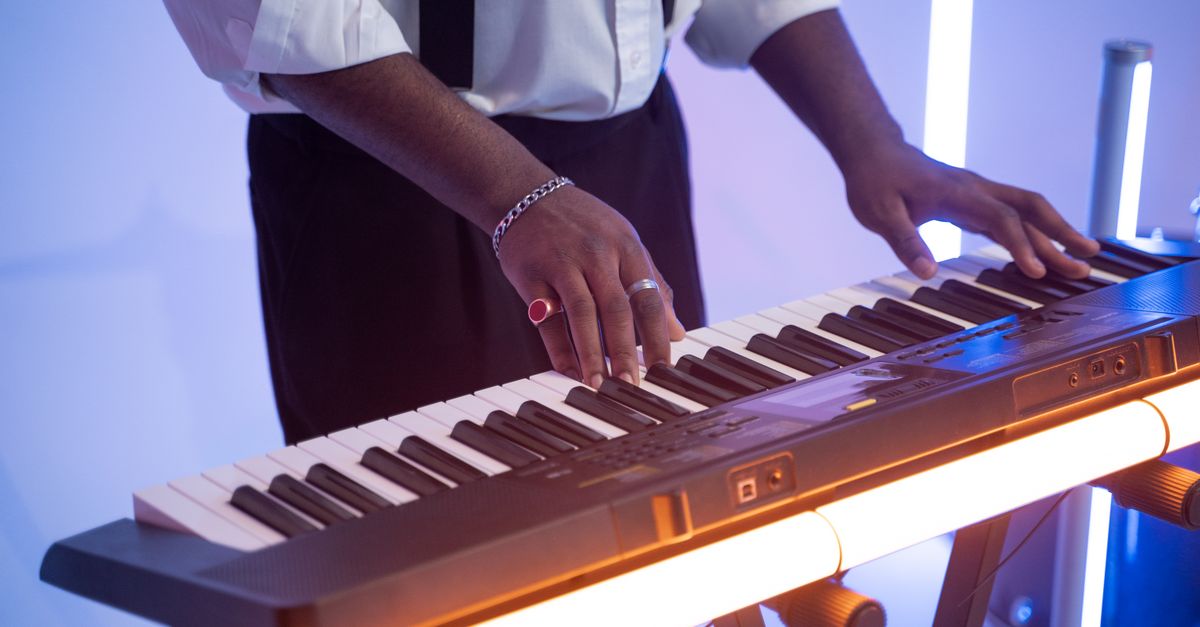
I’ll leave you with this: AI adoption in education isn’t about making music easier — it’s about making it more accessible. A kid in a rural town with no access to a piano teacher can now learn harmony, composition, and production through AI-guided tools. A student with a physical disability can compose using voice commands. A shy teenager can explore songwriting without fear of judgment.
That’s the revolution nobody’s talking about.
The future of music education isn’t about man vs. machine. It’s about man with machine — creating sounds we can’t even imagine yet. The teachers who get this will shape the next generation of musicians. The ones who don’t will be left teaching from a textbook while the world plays on.
So here’s my challenge to you: Try one AI tool this week. Not to replace your practice, but to expand it. See what happens when you let the algorithm suggest a harmony you’d never think of. See how it feels to have a patient, tireless practice partner.
And when a student asks, “Is it cheating?” — smile and say, “Only if you don’t learn anything.”
Because that’s the real secret: AI adoption in education isn’t about the technology. It’s about the student becoming more of who they already are. And that’s something no algorithm can ever replicate.
METATITLE: 70% of Music Teachers Ignore AI — Here’s the 30% Secret They’re Hiding
METADESC: AI adoption in education is quietly rewriting music learning. Discover 3 tools that give students superpowers, the hidden danger of homogenization, and a 5-step plan to start tomorrow.
KEYWORDS: AI adoption in education, music education technology, AI music tools for teachers, personalized music learning, AI-powered music composition, music teacher AI guide, future of music education