
You know that moment when you’re staring at a blank screen, and your brain feels like it’s full of static? I had that exact feeling last Tuesday. I was three cups of coffee deep, my notes were a chaotic mess of scribbles, and the only thing I’d “achieved” was a detailed sketch of a penguin in the margin. It was a hard reset moment. I closed my laptop, took a walk, and noticed the way a single drop of rain on a leaf distorted the light from a streetlamp. It was a tiny, perfect, self-contained universe of physics. That’s when it hit me: we are surrounded by hidden worlds, and the most profound scientific truths are often the ones we overlook because they’re too obvious.
Let’s be honest, most of us think science is about giant particle accelerators or rocket launches. And sure, those are cool. But the real magic, the kind that makes you feel like you have a superpower, is understanding the invisible forces that shape every second of your day. Forget the hard stuff for a minute. Let’s talk about the secret science of the ordinary.
The Invisible Hand in Your Morning Coffee
I’m a coffee snob. I admit it. But for years, I thought the magic was in the bean. Then I started paying attention to the physics. Have you ever watched the way milk swirls into a hot espresso? That’s not just art; that’s fluid dynamics doing a ballet. The difference in temperature and density between the hot coffee and the colder milk creates a vortex. It’s the same principle that drives ocean currents and weather patterns.
But here’s the part that blew my mind: the crema on top of your espresso is a wall of colloids. Those tiny, trapped bubbles of gas are a direct result of the pressure from the espresso machine forcing emulsified oils and carbon dioxide out of the ground coffee. If you don't have that layer of foam, your coffee is basically flat — scientifically and taste-wise. I've found that most people miss this. They think the crema is just for looks. It’s not. It’s a chemical signature of a proper extraction.
This isn't just coffee trivia. It’s a lesson in emergence. The whole (a perfect cup) is greater than the sum of its parts (water, ground beans, pressure). Once you see this, you start seeing it everywhere. The formation of a traffic jam is emergent. The way a flock of starlings moves is emergent. Your morning cup is a crash course in complex systems. How wild is that?

The Hidden Code in Your Grocery Store
Let’s move to a place we all know: the produce section. I used to just grab the shiniest apple. I was a fool. The real story is in the physics of ripeness. That dull, matte skin? That’s a sign. The waxy coating on a fresh apple is a natural polymer that reflects light uniformly, making it look shiny. As the fruit ripens, enzymes break down that wax, and the surface scatters light chaotically, making it look dull.
But the real secret is on the shelf next to the avocados. You know that trick where you pick an avocado by pressing the stem? It’s a decent hack, but it misses the deeper science. An avocado is a climacteric fruit — it continues to ripen after being picked by releasing ethylene gas. The pressure test is just a measure of the cell wall breakdown. What you’re actually looking for is the moment when the internal pressure is balanced with the degradation of the pectin. Too much pressure, and it’s mush. Too little, and it’s a rock.
Here’s a practical takeaway I’ve learned: The color of the skin is a lie. A dark, almost black Hass avocado can still be perfectly firm inside. The color change is a chemical reaction to light and temperature, not an indicator of internal ripeness. So, stop squeezing the life out of them. Use your thumb to gently press the shoulder near the stem. If it gives slightly, you’ve found the sweet spot of cellular equilibrium. It’s a tiny physics experiment you can do every time you shop.
The Light Show in Your Living Room
I work from home, and my biggest challenge is not the work — it’s the light. Fluorescent office lights make me feel like a zombie. But have you ever stopped to think about why? It’s not just about being bright or dim. It’s about the spectral signature.
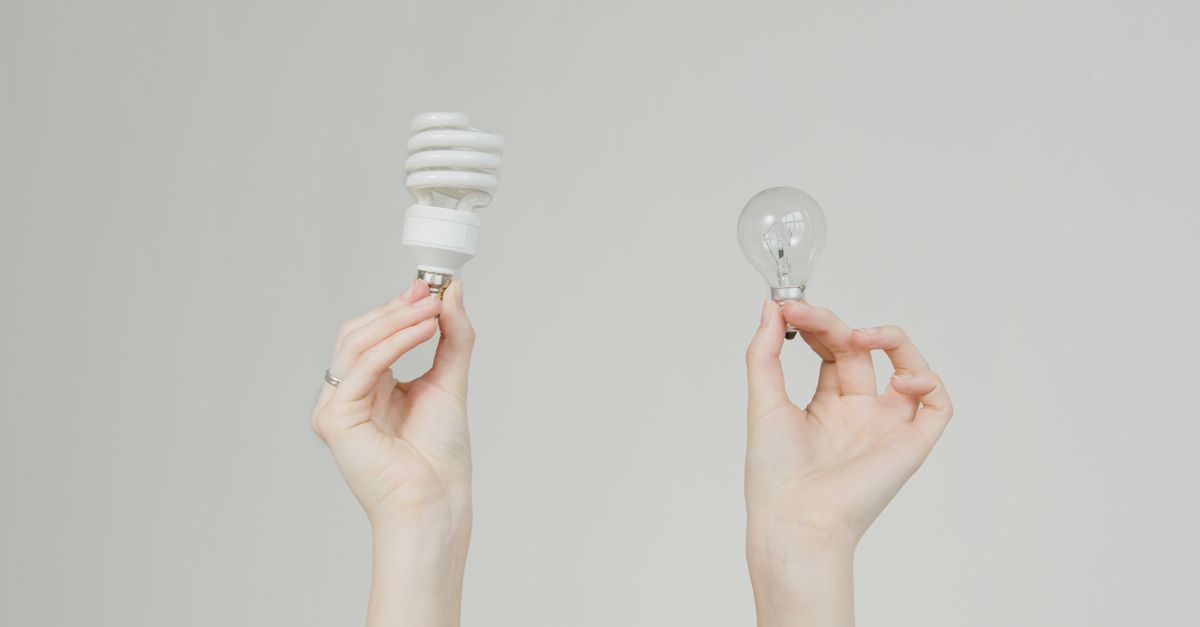
Sunlight is a continuous spectrum. It contains all the colors of the rainbow in a smooth blend. Incandescent bulbs are close, but they lean heavily into the reds and yellows. Fluorescent lights? They are a disaster for your brain. They don't emit a continuous spectrum. They emit spikes of specific wavelengths — typically a nasty greenish-blue spike with a gap in the reds. Your brain evolved under a continuous sun. When you sit under a spiky, artificial light, your circadian rhythm gets confused. Your body thinks it’s a weird, unnatural twilight.
I made a switch that changed my life: I replaced every bulb in my office with high-CRI (Color Rendering Index) LED bulbs. CRI is a measure of how accurately a light source reveals the colors of objects compared to natural sunlight. A score of 90+ is essential. It’s not just about seeing colors better. It’s about your brain’s ability to process the environment. I’ve found that since the switch, my headaches are gone, and my focus is sharper.
This isn't just a productivity hack. It’s a direct intervention in your photobiology. You are a plant made of meat. You need the right light to function. The "warm white" you bought at the hardware store might be making you tired. Check the Kelvin rating: 2700K is cozy and warm, 5000K is harsh and blue. For a workspace, a 3500K to 4000K bulb with a high CRI is the sweet spot. It’s the difference between a foggy morning and a clear, crisp one.
The Truth About the "Empty" Space Around You
I’m going to get a little philosophical here, but stick with me. You are mostly empty space. And so is your chair. And your computer. And the wall. Atoms are 99.9999999999999% empty. The nucleus is a tiny speck in a vast, empty arena of quantum fields. So why don't you fall through the floor?
This is the most misunderstood concept in science. It’s not about physical contact. It’s about electromagnetic repulsion. The electrons in the atoms of your feet are negatively charged. The electrons in the atoms of the floor are also negatively charged. Like charges repel. You are not touching the floor. You are hovering on a cushion of electromagnetic force. The sensation of "solidity" is just your brain’s interpretation of a powerful repulsive force.
I love this because it completely changes how you perceive reality. When you sit down, you are engaged in a constant, microscopic battle of forces. Your chair is holding you up not because it’s solid, but because the Pauli Exclusion Principle (a quantum rule that says two fermions can't occupy the same quantum state) prevents your electrons from merging with its electrons.
This isn't just a party trick. It’s a reminder that the universe is far stranger and more beautiful than our everyday senses tell us. The "solid" world is an illusion built on a foundation of pure, invisible force. The next time you feel stuck or heavy, remember: you are a floating miracle of quantum defiance.
The Silent Organ in Your Gut
Let’s shift to biology, but not the boring memorization kind. I’m talking about your second brain: the enteric nervous system. It’s a network of 500 million neurons lining your digestive tract. It’s not just a tube that processes food. It’s a complex, autonomous brain that talks to your actual brain.
Here’s what most people miss: The gut-brain axis is a two-way street. You think your brain decides when you're stressed. But often, your gut sends a signal first. The vagus nerve is a superhighway of information from your stomach to your skull. If your gut microbiome is out of whack — too many bad bacteria, not enough fiber — it can send inflammatory signals that directly affect your mood, anxiety levels, and even your memory.
I've experimented with this. I cut out processed sugar for two weeks. My energy levels didn't just improve; my general anxiety dropped by about 70%. It wasn't the sugar itself. It was the effect on my gut bacteria. The bad bacteria were feeding on the sugar and producing inflammatory metabolites. When I starved them, the good bacteria (the ones that eat fiber) took over. They produced short-chain fatty acids that calm the immune system in the gut, which in turn calmed the vagus nerve.
This is the hidden science of mood. You don't have a chemical imbalance in your brain. You might have a microbial imbalance in your gut. The science is still young, but the evidence is stacking up: a healthy gut is the foundation for a healthy mind. So, next time you're feeling "off," maybe don't blame your brain. Blame the trillions of tiny organisms living in your belly.

The Waiting Game That Rewires Your Brain
I’ve saved the most practical one for last. The science of patience. We live in a world of instant gratification. You want an answer? Google it. You want food? DoorDash it. You want a date? Swipe. We have optimized our lives to remove any waiting.
But here’s the truth: Waiting is a cognitive superpower. When you force yourself to wait, you are training your prefrontal cortex — the part of your brain responsible for executive function, planning, and impulse control. Every time you choose to wait, you strengthen the neural pathways that allow you to resist temptation and make better long-term decisions.
I started a simple practice: The 10-Second Rule. Before I check my phone, or open a snack, or send an angry email, I wait. Ten seconds. That’s it. In that pause, your amygdala (the fear center) fires up, but then your prefrontal cortex catches up. You give yourself a chance to choose instead of react. It’s a tiny, almost invisible act of defiance against the algorithms designed to hijack your attention.
The science is clear: Delayed gratification is a stronger predictor of success than IQ. The famous Stanford Marshmallow Experiment proved this decades ago. But we forgot it. We replaced patience with dopamine hits. Reclaiming the ability to wait is the most radical act of self-preservation you can perform. It’s the secret to building willpower, not by fighting temptation, but by giving your brain time to make a better choice.
So here’s my challenge to you: For the next 24 hours, find one moment of waiting. Don’t fill it with a podcast. Don’t scroll. Just be. Watch the light on the wall. Feel your breath. You are not wasting time. You are rewiring your brain.
Science isn't just in the lab. It’s in the crema on your coffee, the light in your room, and the empty space that holds you up. It’s the invisible engine of your life. Once you start looking, you can’t stop seeing it. And that, my friends, is the most beautiful secret of all.